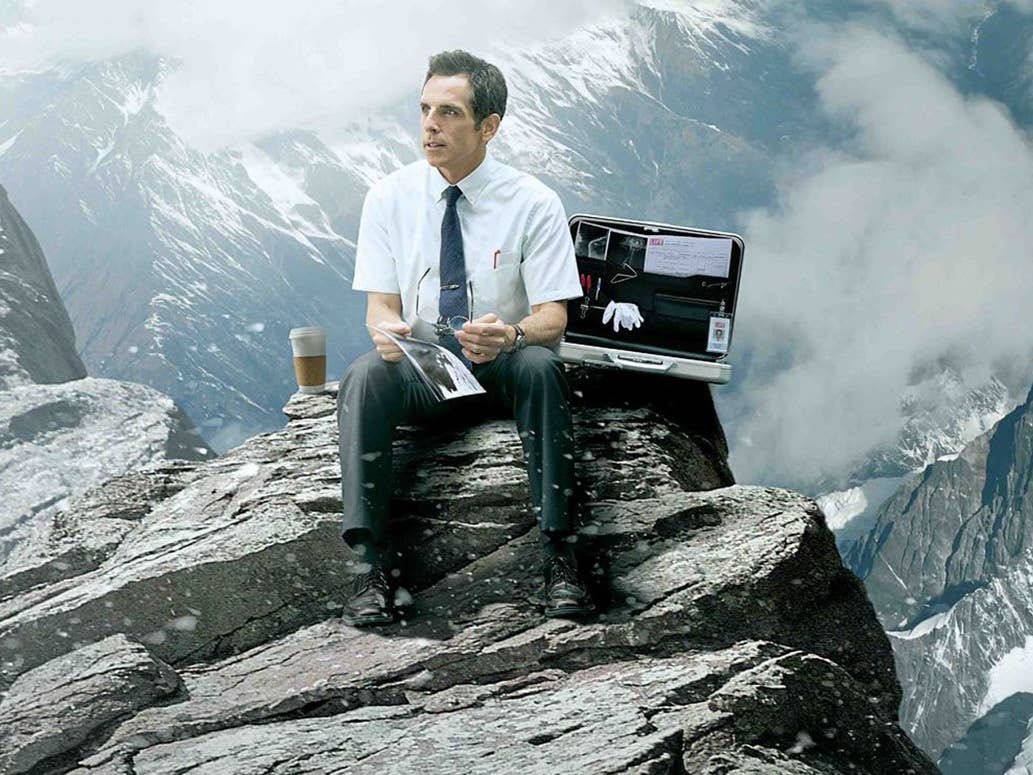
There is a kind of safety in imagining a life before actually entering it, which is probably why Walter Mitty has always been slightly uncomfortable for me to watch. His problem is not particularly exotic. He is not trapped inside a dystopia, stranded on another planet or being hunted by an elaborate conspiracy. He is simply very good at imagining the person he could be and considerably less efficient at becoming him. Unfortunately, this is much harder to dismiss as someone else’s problem.
Walter spends much of his life somewhere between reality and rehearsal. When the real world becomes awkward or insufficiently cinematic, imagination supplies a better version. In there, he knows what to say, becomes brave at exactly the correct moment and makes the gesture the scene requires. The fantasies are exaggerated because this is a film, and two hours of somebody quietly imagining that they finally replied to an email would probably test even the most committed audience. The mechanism underneath them is less ridiculous. There are versions of ourselves we can carry privately for years without introducing them to anyone. We know how that person would live, what they would stop tolerating and where they would go if fear became temporarily unavailable.
The inconvenient part is that imagining possibility can offer just enough emotional satisfaction to postpone testing it in reality. Walter does not lack imagination. What he lacks is movement. That is why I do not think the film is really about becoming adventurous. It is more interested in the point where imagining a life stops being preparation for living one and quietly becomes its replacement.
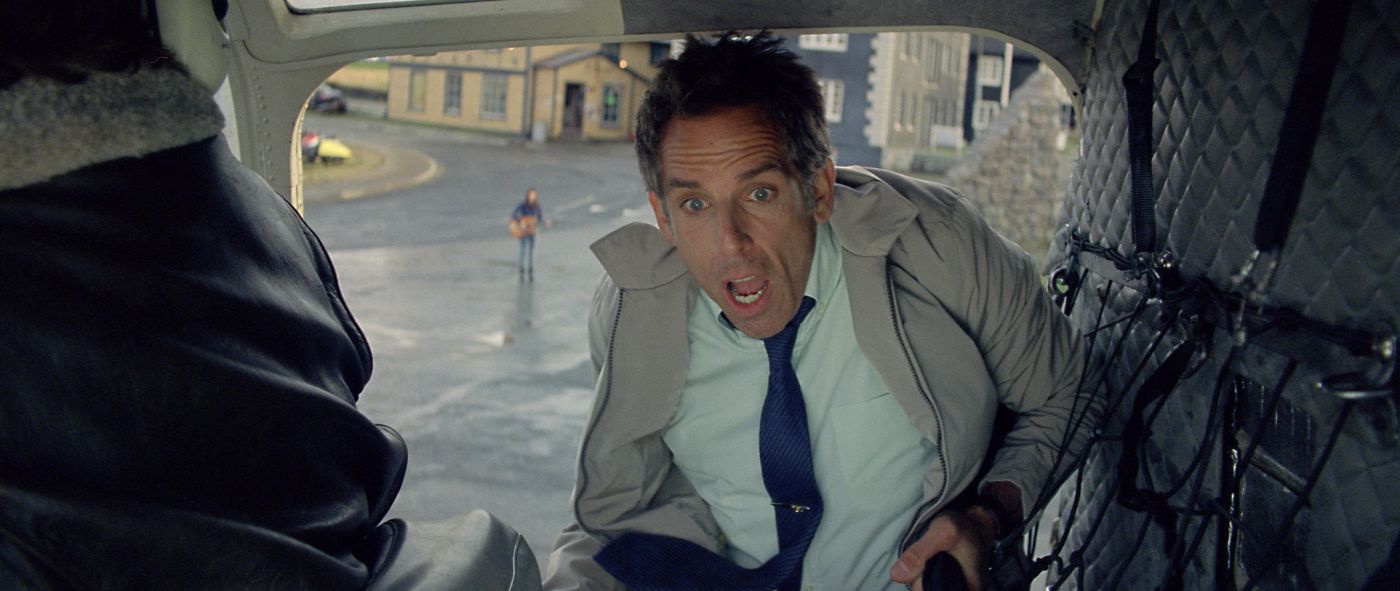
What I like about the film is the order in which Walter changes. He does not become brave and then act. He acts before he has become the sort of person who comfortably does any of the things he is suddenly doing. He gets on the helicopter while uncertainty is still very much present. He travels without complete information. He makes decisions that are sensible and others that are recognisably human.
This feels closer to the way change usually happens. We like to imagine readiness as something that arrives before action, when it is often a retrospective description. We act, discover that the action did not kill us, and quietly update our idea of who we are capable of being. Identity catches up later.
Walter’s transformation works because he does not become unrecognisable. He remains quiet, observant, awkward in places and attentive to detail. The distance simply becomes smaller between the person who existed privately and the person willing to exist publicly. Growth is often presented as reinvention, as though every worthwhile change requires dramatically murdering the previous version of yourself. Walter does something less exhausting. He permits more of himself to become real.
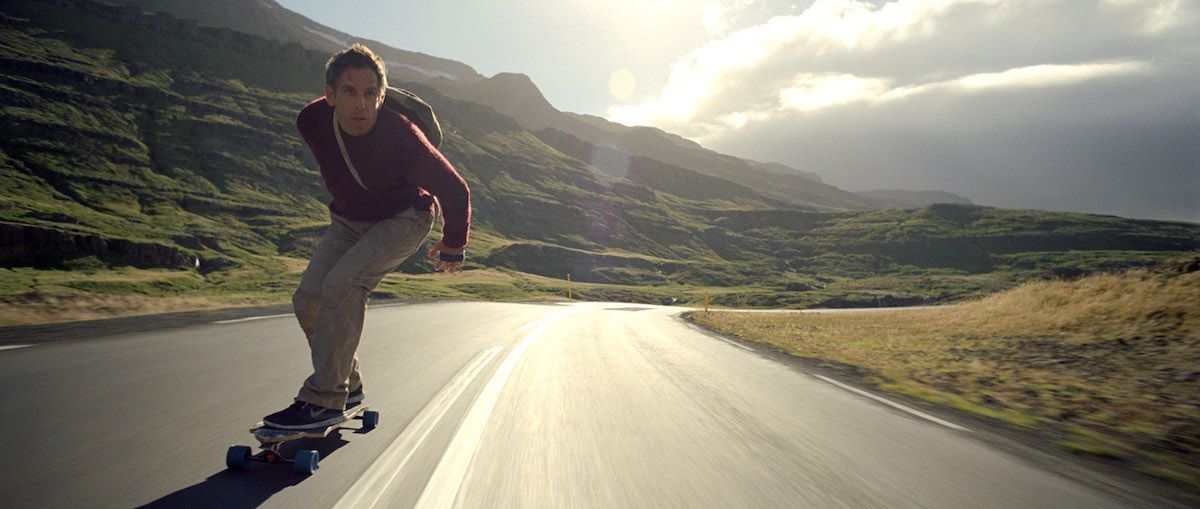
As his real experiences become larger, his fantasies grow quieter. I like that the film does not stop to explain this. His internal cinema simply becomes less necessary. Reality becomes interesting enough.
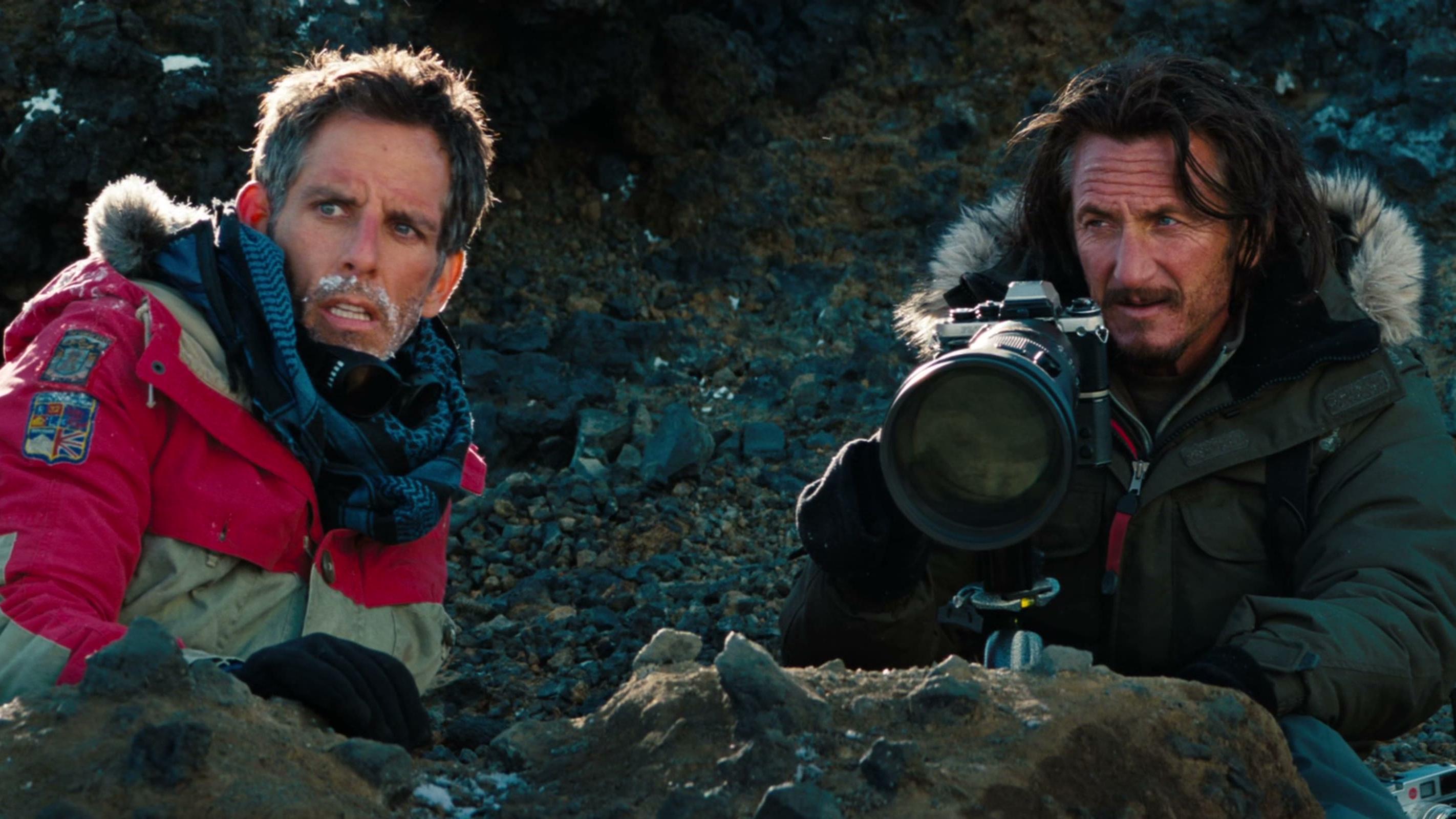
Some of the moments that stay with me are therefore not the loud ones. A landscape, a conversation, somebody doing their work exceptionally well. The snow leopard scene matters for exactly this reason. Sean O’Connell has the photograph available to him and chooses not to take it, not because the moment is unimportant but because it seems important enough to experience before converting it into evidence.
That idea feels even stranger now. Almost anything can become proof that it happened. Food becomes a photograph. A concert becomes several vertical videos of a concert. A beautiful place occasionally has to wait until everyone finishes documenting how beautiful it is. The possibility of recording something has become so ordinary that choosing not to can feel vaguely philosophical, which is an impressive achievement for essentially putting the phone back in your pocket.
The film is not arguing against photography. That would be an odd position for a story built around photographers and an iconic image. It is making a subtler distinction between experiencing something and possessing proof that you experienced it. Those are not always the same thing.
I also like that the film does not treat Walter’s old life as worthless. Adventure stories occasionally solve their protagonists by insulting everything that came before. The office was meaningless. Routine was cowardice. Authenticity can apparently only begin somewhere geographically inconvenient.
Walter Mitty is kinder than that.
Walter’s work mattered before he travelled anywhere. He is good at it. He cares about images. He understands the archive at Life magazine in a way the people dismantling it do not. His competence is not a consolation prize for failing to have a more exciting life. The journey does not reveal that the previous years were wasted; it reveals that they were incomplete. A quieter life still contained skill, care, values and parts of a person that eventually became useful elsewhere.
The missing negative completes that idea beautifully. Walter spends most of the story searching for an image, only to discover that the image is him. Not the Walter swinging through burning buildings in his imagination, not the traveller standing somewhere dramatic, just Walter doing his job.
It is sentimental, obviously. The film has spent enough time earning the right to be sentimental, so I am willing to let it have one.
Sean had already seen something worth photographing in the person Walter was before Walter himself believed that person was worth inhabiting fully. The irony is not that Walter was secretly extraordinary. It is that he had spent so much time imagining another version of himself that he was sometimes less present in his own life than the people watching him.
By the end, that changes. His life does not matter because it finally looks cinematic from the outside. It matters because he has begun participating from the inside.
There is a difference between imagining who you could become and giving that person somewhere to exist.
At some point, possibility needs a body.
What I carry into the work.
I am very comfortable thinking before making. Usually that is useful. Occasionally it becomes an extremely sophisticated form of not starting.
This film reminds me that some information only appears after an idea meets reality. A direction can be researched, structured and discussed for a long time, but eventually something has to be made, tested, rejected or put in front of someone.
Clarity does not always come before movement. Sometimes movement is how clarity arrives.